
Hiyoshi-no Mori Garden Art Museum in Yokohama, Kanagawa. This place carries on the ideas and works of sculptor Mitsuaki Tanabe, who had deep ties with Australia. His life-long theme was ‘wild rice.’ His creative exploration of humanity’s most primal food and the environment eventually reached the vast Australian landscape, culminating in an 82-metre long artwork inspired by unhulled rice grains. However, his sudden passing left unfinished works in Darwin, Australia. We talked to his son, Takemitsu Tanabe, who planned and carried out projects to complete his father’s work, and his current efforts to carry on and share his father’s legacy.
(Profile)
Takemitsu Tanabe, Curator, Hiyoshi-no Mori Garden Art Museum
Unfinished sculpture work left on Australian soil
--- Please tell us about the Hiyoshi-no Mori Garden Art Museum and your current work
At the Hiyoshi-no Mori Garden Art Museum, we have a permanent exhibition of works by Mitsuaki Tanabe –my father – as well as documents that influenced his works. I work here as a curator, and I’ve been promoting my father’s work since he passed in 2015. I am also actively involved in maintaining the Hiyoshi-no Mori which has been operating for 400 years.
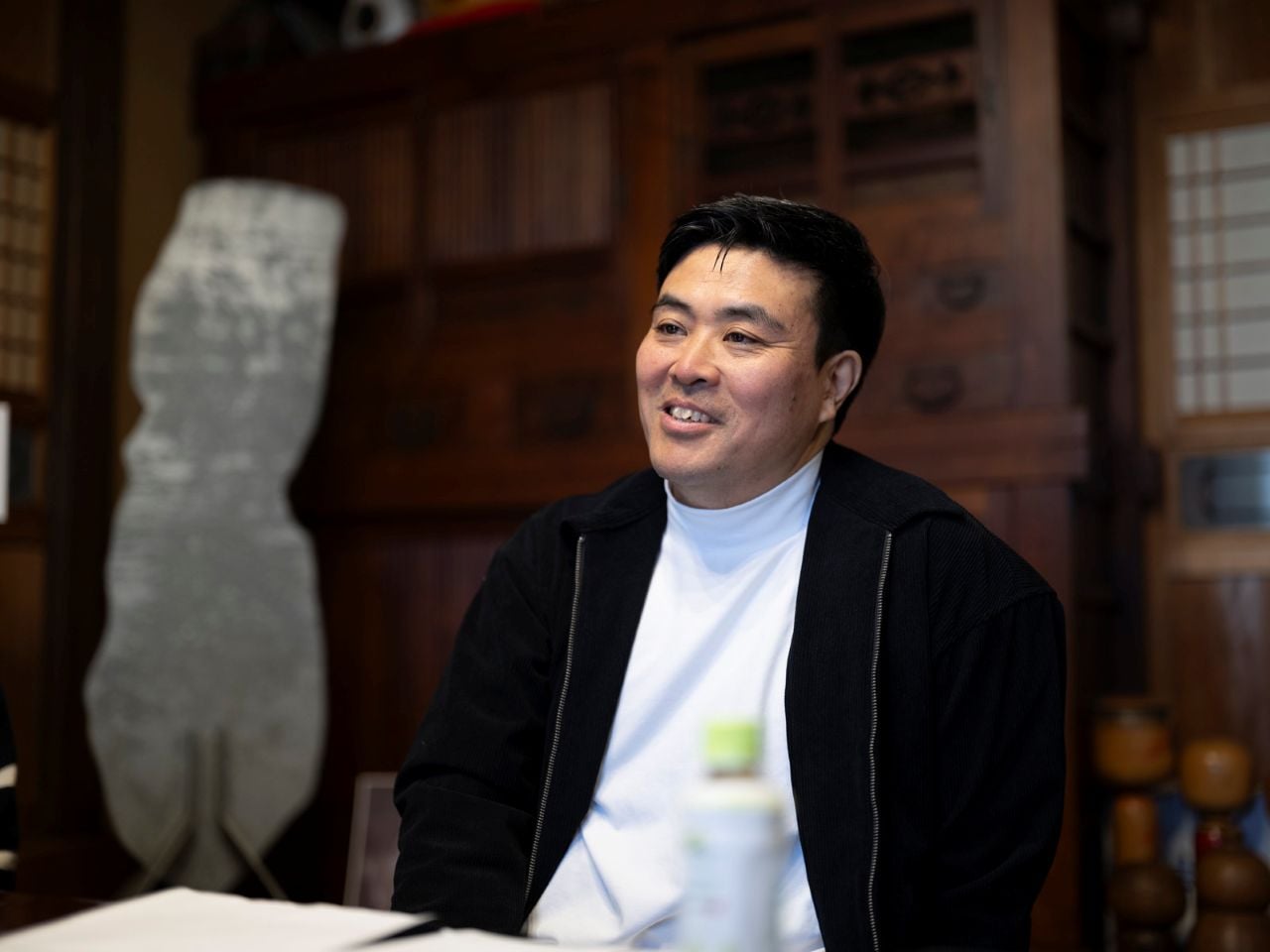
Before I discuss his connection with Australia, I believe it is necessary to talk about Mitsuaki Tanabe. My father was born in 1939, before the war. He created large-scale works around the world with the motif of ‘conservating natural habitats of wild flora and fauna,’ before passing on 30 March 2015. He suffered a heart attack in January 2014 and passed the following year in March. He was 76, but was actively engaged in creative work until the very day he fell ill.
Back then, I had quit my previous company to focus on preparing for the establishment of the museum, with the goal of passing on the cultural heritage and natural environment that had been preserved by my family for 400 years to future generations. My father was an individualistic artist; I had finally begun to build a close and open relationship where we could chat over drinks, so I was devastated when he fell ill and was no longer able to communicate. However, I pulled myself together and devoted myself to establishing the museum Mitsuaki had long envisioned. Mitsuaki passed four months after the opening. After his death, the unfinished works he left in Australia consumed my thoughts.
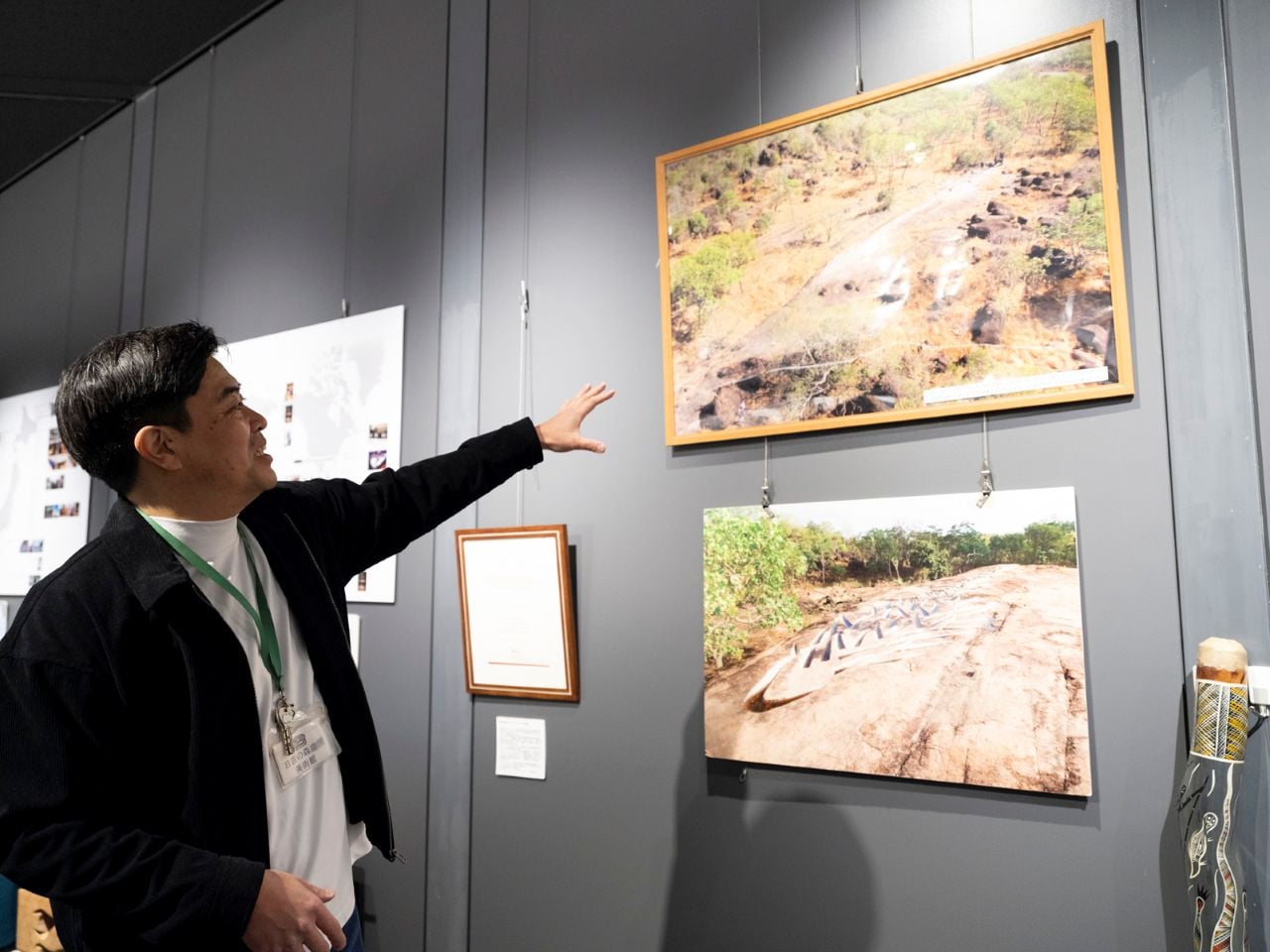
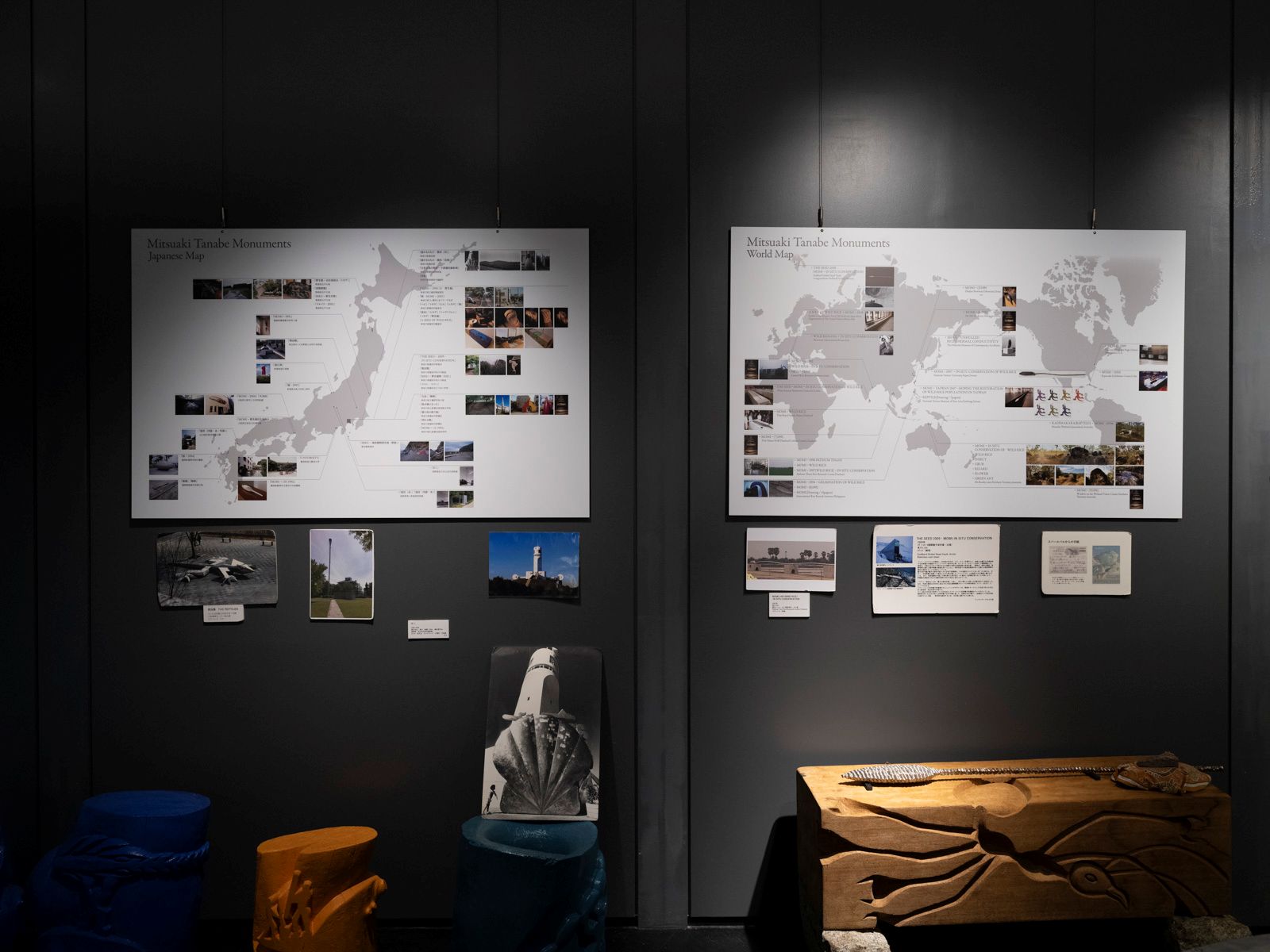
Inside the Mitsuaki Tanabe Museum
My father, who pursued wild rice as a symbol of human survival
--- Please tell us more about Mr Mitsuaki Tanabe and his connection with Australia
Mitsuaki Tanabe was not just a visual artist, but an artist who conveyed messages with a strong focus on wild flora and fauna. The central theme of Mitsuaki’s work was conservation of the natural environment and ecosystem. That is why his artwork includes giant sculptures of lizards and snakes, animals that people to tend to dislike, yet are important members of the ecosystem. He regarded the ‘conservation of wild rice’s natural habitat’ as his lifework.
A conversation with an abbot at a temple called Gokuraku-ji in Yokohama was apparently what sparked his interests in wild rice. Rice is an extremely important food for Japanese people, and is consumed by many around the world. Rice has such profound spiritual significance that it is also called shari, which has the same meaning ‘the sacred remains of Buddha.’ And yet, there are very few works of art centred on this theme. This led him to think that as a Japanese person, he should portray rice through art. From then, he started to pursue wild rice not just as food, but as ‘a symbol of human survival.’ This journey began in the late 1980s.
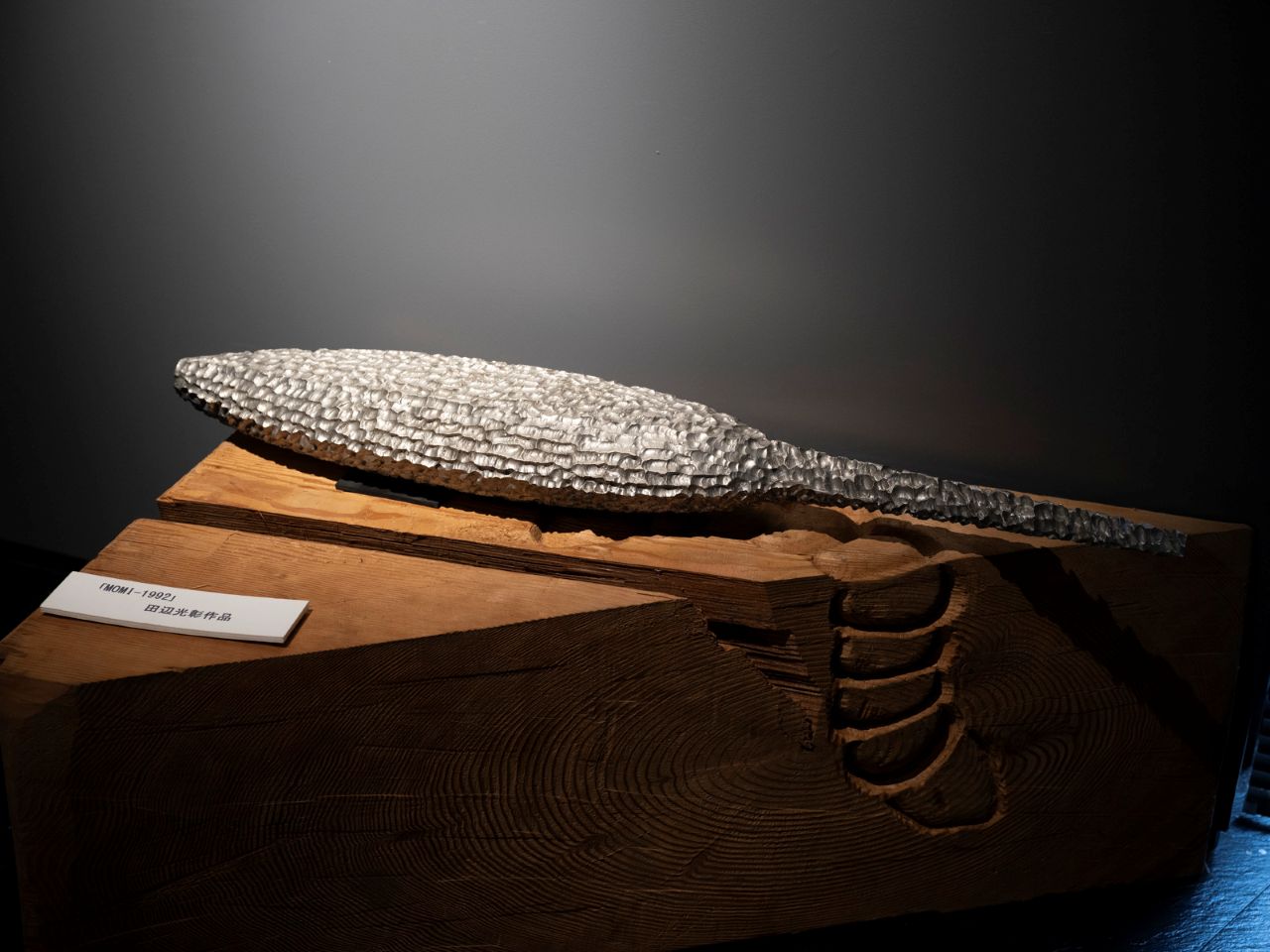
「MOMI-1992」(1992)
Mitsuaki visited Southeast Asian countries with Dr Yoichiro Sato, an academic and agronomist (currently the director of the Museum of Natural and Environmental History), and others to survey and research wild rice. He also advocated for the conservation of natural habitat of wild rice by creating artworks in countries including Thailand, China, India, Nepal, and the Philippines. A simplified explanation for the purpose of conserving wild rice habitats is that wild rice is the original form of its species and possesses highly adaptable genetic traits. This means wild rice contains valuable genetic resources that can be used for genetic improvement if existing rice is no longer able to withstand rapid climate change or rapid population growth in the future. In other words, wild rice has the potential to be the seed for new varieties that could help sustain humanity. However, its natural habitats are threatened by rapid urbanisation. The importance of wild rice is recognised around the world. Some works from the ‘MOMI’ series, which depicts wild rice, are even held in the collection of the Thai Royal Family. Among these creative activities, he regarded his project to conserve wild rice natural habitats in Australia as his life’s work.
Research conducted in 1978 by Japanese wild rice scientist Dr Hikoichi Oka revealed vast wild rice habitats in Australia’s Northern Territory. Moreover, these wild rice populations were found to have purer genetic traits as no commercial rice had been cultivated in surrounding areas. This fact drew Mitsuaki’s attention, so he visited the Australian Embassy in Tokyo and said he wanted to visit the site and create artworks aimed at conserving wild rice habitats. Bill Withers, who was then Minister-Counsellor for agriculture, and Tomoko Nakamura, senior research officer, were very supportive. Thanks to their assistance, he was able to visit the wild rice habitats in the Northern Territory and Queensland in 2003. From that point, Mitsuaki went on to create many artworks across the vast landscape of Australia.
Creating a giant sculpture through Australia-Japan Foundation funds
--- It seems that he received support from the Australian Embassy for his creative works at the beginning.
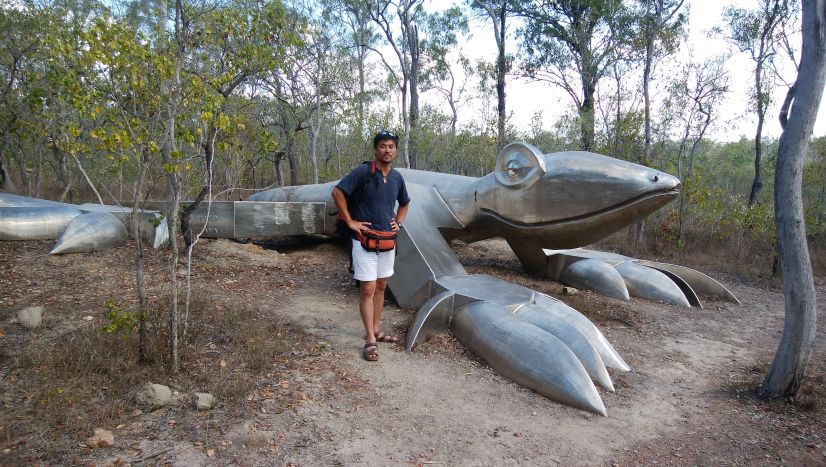
Yes, that is correct. First, Mitsuaki installed a massive sculpture of a lizard strongly advocating for the conservation of wild rice habitats in the Mareeba Wetlands in 2006, with permission from the Queensland Government. Titled KADIMAKARA (reptile, MOMI-2006), the sculpture measures 19-metres in length, weighs approximately 11 tonnes, and is made from stainless steel. It reflects the scale of my father’s vision for the conservation of wild rice habitats. It also points to the fact giant reptiles inhabited this land long before humans, conveying a message that ‘humans are not special.’
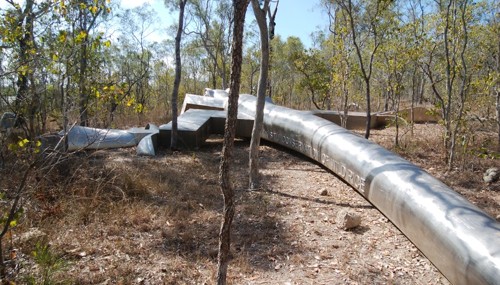
KADIMAKARA (reptile, MOMI-2006) (2006)
In the Northern Territory, he was granted permission to carve sculptures into granite boulders in the Mount Bundy area, a wetland located between Darwin and Kakadu National Park after discussions with Northern Territory Government officials. Because the site is sacred to Indigenous Peoples, the support from the Australian Embassy played a significant role in obtaining permission for this project.
My father continued to carve sculptures based around the theme of wild rice and the surrounding flora and fauna. He carried out this work over ten annual visits, between 2004 and 2014, staying for about a month each time. I heard that during this time, his project was selected to receive a grant from the Australia-Japan Foundation. I remember how excited my father was every time he was about to travel to Australia, he really looked forward to it. Perhaps for him, it was an ideal place that freed him from the secular world, allowing him to fully immerse himself in his creative work.
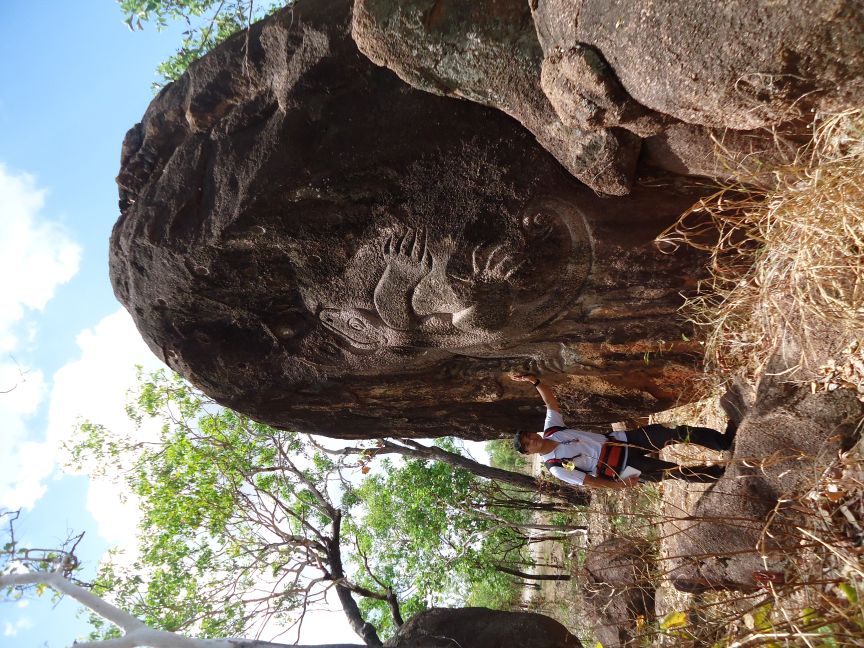
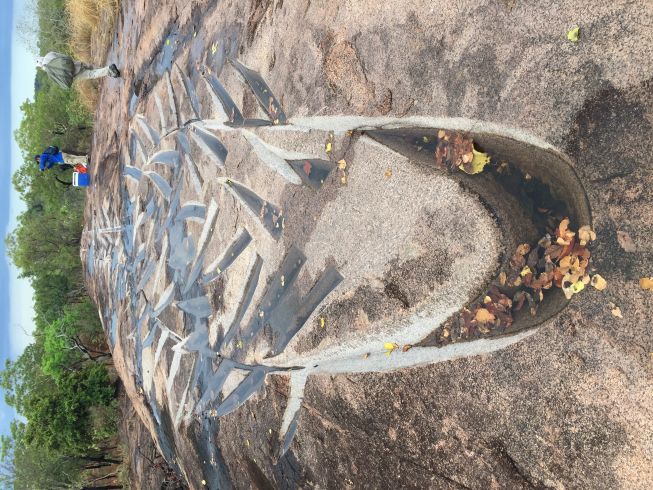
Mitsuaki fell ill in 2014. He had already made plans to go to Darwin that year. Sculptor Kazuhisa Aketa was supposed to join as his assistant as well. The previous year Mitsuaki had left for Australia saying, ‘This will be the last time.’ But ended up carving the outline of a new sculpture. When he returned, he said, ‘Now I can go back again.’ That sculpture was left unfinished. Various artworks featuring motifs such as ants and lizards are at the site, the largest of which is an 82-meter-long sculpture depicting an unhulled rice grain. But what to do with the unfinished artwork that was drafted a year earlier? In the end, I decided to find a way to complete it. On reflection, I think I was rather emotional after losing my father … the process turned out to be so demanding that I almost came to regret my decision (laughs).
--- Please tell us about completing the unfinished work left in the suburbs of Darwin.
In August 2016, the year after my father’s passing, I received an Australia-Japan Foundation grant and visited the graphite boulders in the Mount Bundy area outside of Darwin. Together with sculptors Jun Yamazoe, who had previously worked with Mitsuaki on a project in Australia, and Kazuhisa Akeda, who was scheduled to accompany my father in 2014, we spent about a month completing the unfinished work. Working from Mitsuaki’s sketches, we began with what was only a six-meter-long outline of an insect. Using grinders, chisels, and hammers, we gradually carved the piece until we reached a state that could be called complete.
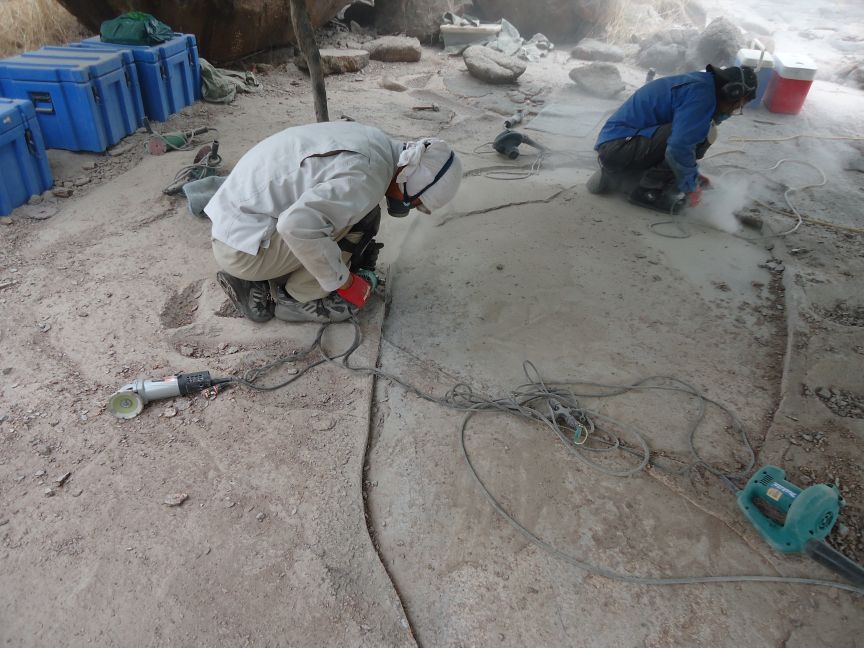
It was during their dry season, and the work was carried out day after day under 37 degrees scorching heat. I vividly remember struggling against the granite, drenched in sweat under shade we made by stretching sheets over thick branches we found on the ground. We were hit by a sudden and intense storm on the first day and I genuinely thought we might die. The storm took down the hotel’s Wi-Fi, so we travelled 100 kilometres to a hamburger shop just to get signal. By working under such gruelling conditions, I was able to feel my father’s passion for creating works that advocate for the conservation of wild rice habitats.
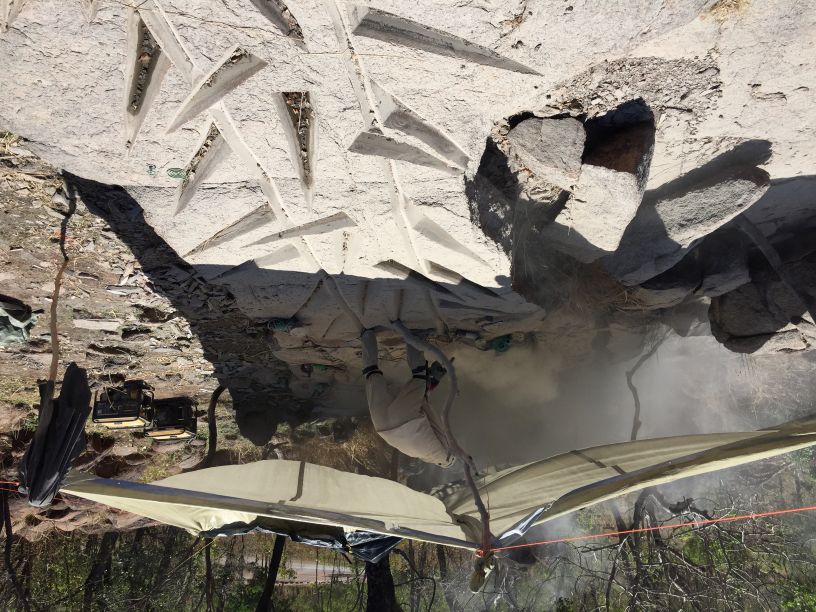
A true artist producing artworks with extraordinary levels of focus
--- What kind of person was your father? Are there any memorable stories you can share with us?
Simply put, he was ‘someone that cannot be measured by conventional values.’ He was larger than life, deeply sincere, and completely unconcerned with personal gain or loss. Once he decided to do something, he did not act based on whether it was rational, but whether he felt it was something he must pursue. He was always thinking about his own form of expression and creative exploration. But, looking back, I think that his ‘extreme nature’ made it possible for him to bring such remarkable artworks into life.
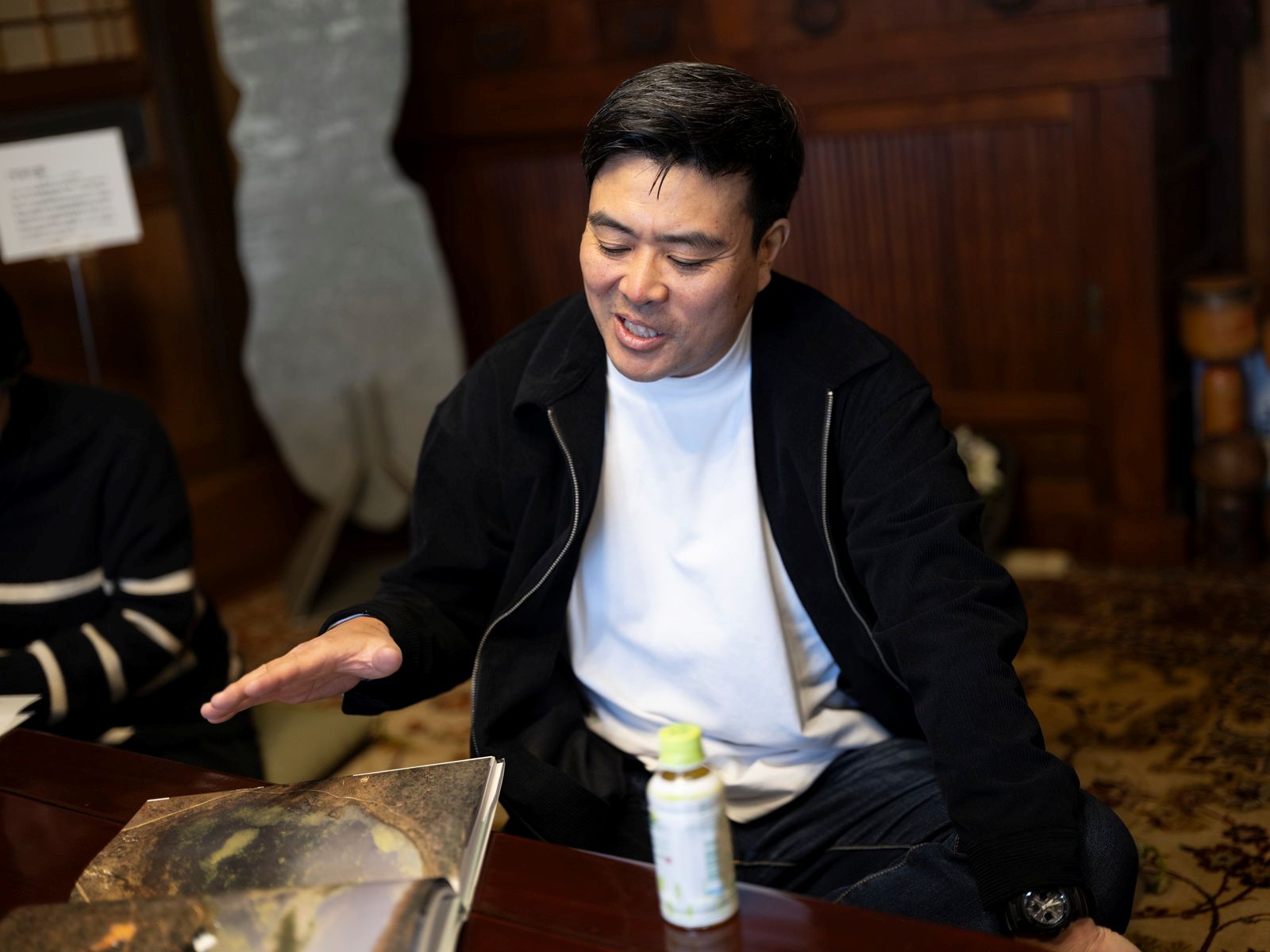
What stands out most is his extraordinary levels of concentration, the characteristic of a true artist. He seemed to lose his sense of time once he immersed himself in creating or delved into research. I have heard that often he would not notice no matter how much someone tried to speak to him. I have also heard that it was nerve-wracking for the people around him during his overseas fieldwork on wild rice, because he would become so absorbed in his work that he lost track of time and even forgot about scheduled border crossings.
--- Were there any new networks established or new opportunities of engagement opportunities created through the Australia-Japan Foundation grant?
In 2017, Murray Hard, the then director of the industry development team in the Northern Territory Government visited Japan and came to the Hiyoshi-no Mori Garden and Art Museum to see my father’s work. More recently in 2024, the couple who own the hotel we stayed at in Darwin in 2016 came to visit. On that occasion, I showed them some of my father’s notable works located around Yokohama. They display a large photograph of my father’s work at their hotel in Darwin and they continue to introduce his work to this day. Also, when my father’s final work was completed, Kezia Purick MLA, the then Speaker of the Northern Territory Legislative Assembly, praised Mitsuaki’s achievements and issued a statement to preserve the site. It is something I am truly grateful for.
The meaning behind ‘protecting heritage’
--- Could you share any visions for your future activities based at the Hiyoshi-no Mori Garden and Art Museum and through the works located in Australia?
When we think about our future activities, I believe a central pillar is ‘how we protect our heritage.’ When I talk about heritage, it’s not just about my father’s work or the 400-year history of the museum, but it is also about wild rice, a primal existence to humanity and the environment it thrives in.
My father was not simply trying to ‘create sculptures of rice plants.’ Rather, he was grappling with the issue of how to protect natural habitats for wild rice, where the ‘original form from before cultivation still exist today. Not only rice plants but the entire ecosystem is involved, including spiders, ants, snakes, and lizards, creatures which are not always considered favourable by humans. I believe for my father, his work was not merely a single sculpture, but rather the ‘environment itself, the survival of humanity.’

Together with BIRD – wild flora (Hiyoshi) near Shimodamachi Yonchome Park. This is an example of a work that is completed by combining with its surrounding environment.
That is why, in Australia as well, he was particular about choosing remote areas between Darwin and Cairns rather than cities. There was meaning in installing his work in the very place where wild rice grows. For example, the idea of ‘preserving seeds’ is becoming more common nowadays, the idea that seeds can be stored simply by freezing them. My father believed that this alone was insufficient. Even if seeds are preserved, it cannot be considered true conservation if the environment in which they naturally grow is lost. I think that is why he came to the idea of ‘protecting the habitat itself.’
Also, I want to present the series of works in Australia through the story of ‘why they are there’ and ‘what remains there,’ rather than simply as ‘works created by a Japanese artist.’ I’m considering sharing this more broadly, for instance by collaborating with local tour groups. The sculptures are located on the way from Darwin to the famous Kakadu National Park, so we will be happy if visitors stop by to learn about Australia’s valuable resources.
Ideally, I hope this initiative will go beyond being merely about art and provide an opportunity for people to reflect on the environment, food, and even the very nature of human existence. Rice is a staple for Japanese people, but there are not many opportunities to think about its origins. My father questioned that and decided to give shape to it. How to pass that on to the next generations … I think my mission is to use the place that is Hiyoshi-no Mori Garden and Art Museum to gradually pass on his profound legacy.
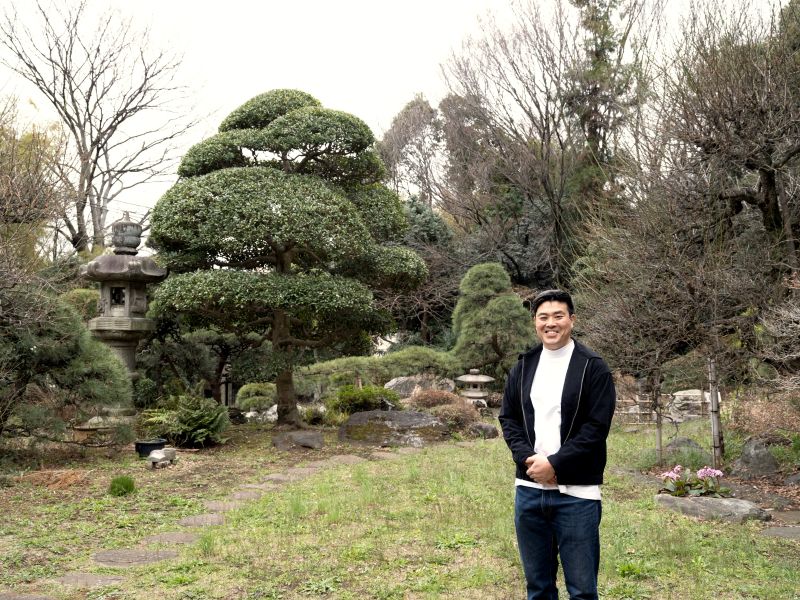
In the garden at Hiyoshi-no Mori
(Profile)
Takemitsu Tanabe
Curator, Hiyoshi-no Mori Garden and Art Museum
Curator at the Hiyoshi-no Mori Garden and Art Museum located in Kohoku-ku, Yokohama, Kanagawa prefecture. As the 14th head of the Tanabe family, which has 400 years of history in the area, he is based at the museum and engages in activities such as guiding visitors through efforts to preserve the original landscape, the region’s history, and art collections, and delivering lectures on local culture. As the biological child of Mitsuaki Tanabe, a sculptor, he completed his father’s unfinished work located outside Darwin, Northern Territory, Australia after his death. (Australia-Japan Foundation)
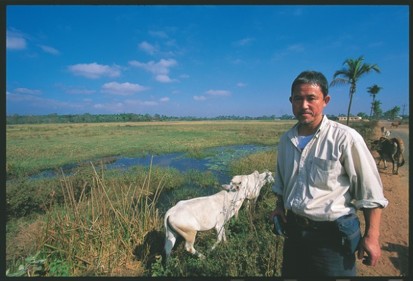
(Mitsuaki Tanabe, biography)
Sculptor. 1939 – 2015. Born in Kanagawa prefecture. Graduated from the Department of Sculpture at the Tama Art University in 1961. The following year, he met the American sculptor Isamu Noguchi and was deeply inspired by him. From 1971 to 1975, he travelled to approximately 50 countries across South America, Europe, Africa, and the Middle East, encountering various cultures. In 1979, he received the Giacomo Manzù Special Excellence Award at the inaugural Henry Moore Grand Prize Exhibition (Hakone Open-Air Museum). From the late 1980s, he turned his attention to wild rice and started initiatives to conserve wild rice habitats with agronomist Yoichiro Sato. Some of his sculptures from the MOMI series are held in the collection of the Thai Royal Family. In 2006, he installed KADIMAKARA (reptile, MOMI-2006), a lizard sculpture, in the Mareeba Wetlands in Queensland, Australia. He then continued his creative works across the Australian landscape for over a decade. The series of sculptures he carved in the Mount Bundy area near Darwin, Northern Territory, became his final work.
(Interview cooperation)
Hiyoshi-no Mori Garden and Art Museum
A museum with a permanent exhibition displaying works created by Mitsuaki Tanabe, and documents that influenced his works. Visitors can enjoy the residence and garden of the Tanabe family, who have a 400-year history in Hiyoshi, Yokohama. Guided tours of wartime air-raid shelters, storages, and old wells on the grounds are provided for local elementary school students. Reservations are required.