
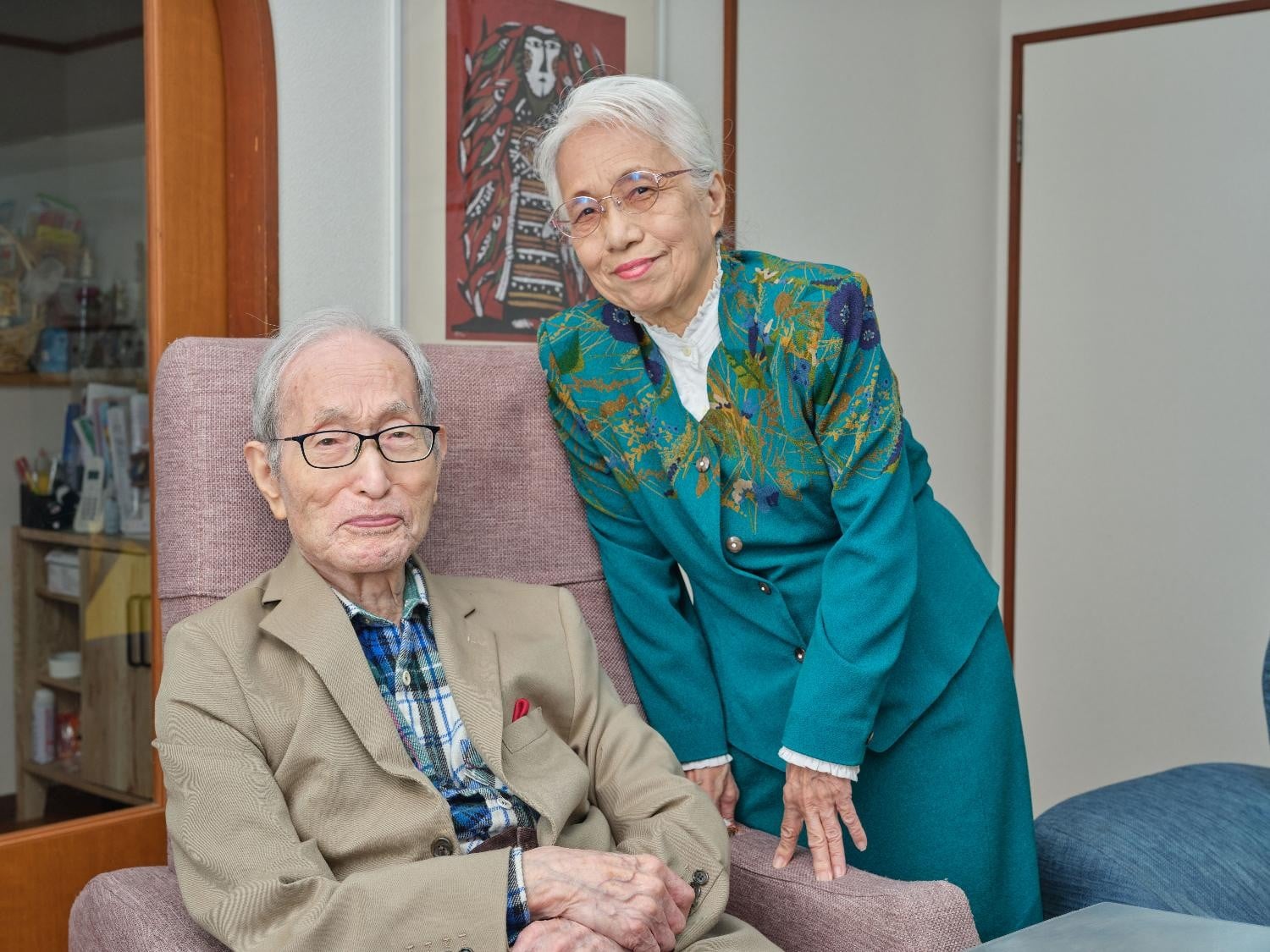
Today, few young Japanese people know that Japan and Australia fought against each other during the Pacific War. Film director Shigeki Chiba and his wife, producer Yoshimi Chiba, released Railroad of Love (1999), a documentary film that tells the little-known story of Father Glynn, who visited Japan during a time when anti-Japanese sentiment prevailed in Australia and dedicated himself to fostering friendship between Australia and Japan. From their acclaimed work documenting the life of Mother Teresa to promoting ‘cineliteracy’, an educational method that uses film production as a tool for learning, Yoshimi Chiba has spent half a century connecting people through the power of film. We asked her what messages she hopes to convey to the next generation through her films about Australia.
Filming the world’s first documentary on Mother Teresa
--- Could you tell us about you and your husband’s past works, including your renowned documentary Mother Teresa and Her World?
My husband, Shigeki Chiba, decided he wanted to become a film director after he was deeply moved by Akira Kurosawa’s To Live (1952) when he was a university student. After working as an assistant director at Daiei’s Tokyo studio, he commenced his professional journey as a screenwriter and joined the Modern Film Association established by Kaneto Shindo and others. Since making his directorial debut with Adopted Children of Love (1964), he has devoted himself to a career in documentary film making. I have worked in planning and production at the Modern Film Association.
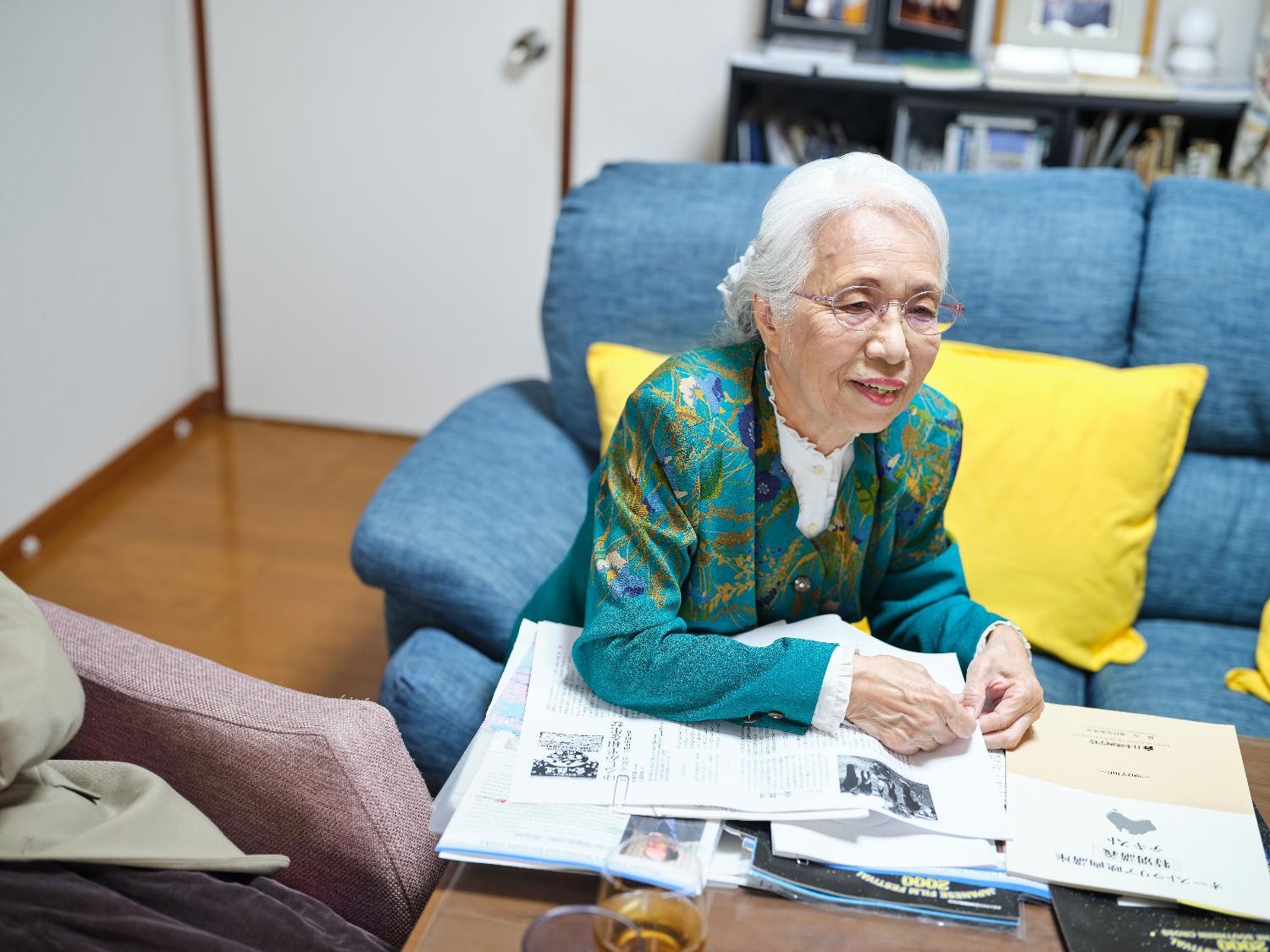
Our most notable work is the documentary film Mother Teresa and Her World (1979). With special permission granted by Mother Teresa herself, we were able to enter the slums in Kolkata, a place described as ‘the worst residential area in the world’ and document the daily lives and works of Mother Teresa and the Sisters. I was responsible for the planning and production of this film. Its release coincided with Mother Teresa being awarded the Nobel Peace Prize, so the film attracted considerable attention. Thanks to that, the film received many awards both domestically and internationally, including the Mainichi Film Awards Cultural Film Grand Prix and the Kinema Junpo Award for Best Cultural Film.
Reflecting on our years of filmmaking, I realise many of our films explored subjects rooted in Christianity. I feel that we have focused on the meaning of ‘reconciliation’ – between God and people, and between people. Along with his film production work, my husband served as the principal of the Yokohama Broadcasting Technical School (the current Japan Institute of the Moving Image), dedicating himself in training the next generation of filmmakers.
Father Glynn advocated for changing the Death Railway to the ‘Railway of Love’
--- The film Railway of Love (1999) was a turning point in establishing the relationship with Australia we have today. What is the film about?

This documentary focuses on the life of Father Tony Glynn, an Australian who dedicated himself to fostering friendship between Australia and Japan in the years following WWII. Most of the younger generation may not know, but during the Pacific War, many Allied prisoners of war (POW) were forced to work on the construction the Burma Railway, later made infamous through the film The Bridge on The River Kwai (1957). Records show that many Australian soldiers were captured and suffered abuse. They were forced into labour and witnessed many of their comrades lose their lives and returned home with strong anti-Japanese sentiments. It was in these circumstances that Father Lionel Marsden, who had served as a military chaplain, called on people to ‘Turn hatred into love.’ He wanted to ‘replace the Burma Railway, also known as the Death Railway, with a “Railway of Love” and connect Australia and Japan.’ Father Marsden himself had only narrowly survived the war, yet he called on people to not hate the Japanese. The young brothers Father Tony Glynn and Father Paul Glynn inherited Father Marsden’s mission. Based in Nara, the brothers worked towards reconciliation, helping to foster humanitarian support and people-to-people exchanges from post-war Australia to Japan. The film documents that little-known movement.
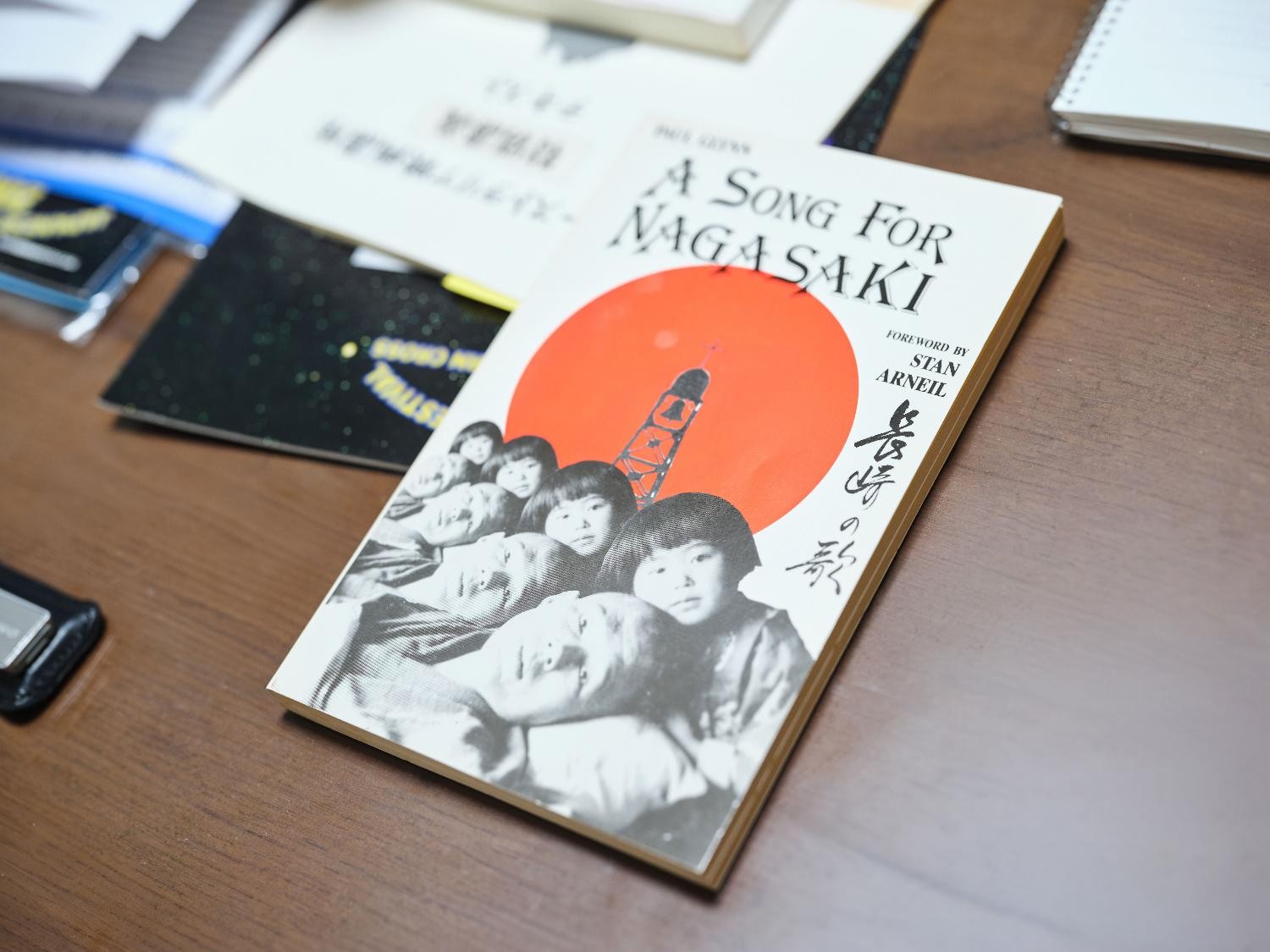
The production of this film began with a chance encounter with a book. In the summer of 1995, when we visited Sydney while searching for a study-abroad destination for our daughter, a local Japanese nun from the Daughters of Saint Paul gave us a book. It was called A Song for Nagasaki. It told the story of Takashi Nagai, a devoted Catholic physician who survived the atomic bomb in Nagasaki. Reading the book sparked our interest in the author, Paul Glynn. He was a Marist priest who had spent many years carrying out missionary work in Japan.
Upon returning to Japan, we immediately contacted the Marist headquarters in Nara and arranged to meet Father Paul Glynn, who was then visiting Japan, in Tokyo. It was through that meeting that we first learned about the work of his older brother, Father Tony Glynn. We subsequently visited Nara and spoke with a wide range of people associated with him. The then mayor of Nara City and Buddhist temple priests spoke passionately of their admiration and respect for Father Tony Glynn. While listening to their stories, we felt increasingly strongly that these people's efforts and experiences should be documented. That conviction led naturally to us making a film about them. Filming began around 1998, and the documentary was completed in 1999.
Based primarily in Nara, Father Tony Glynn devoted himself to a wide range of activities. While supporting war widows and children, he paid visits to the graves of Japanese POWs at the Cowra POW camp site in Australia, attended a memorial service at Naoetsu city, Niigata prefecture, where Australian POWs were once held, and worked to return Japanese swords remaining in Australia. We traced the footsteps of Father Tony Glynn by interviewing over 100 people who knew him in both Australia and Japan. Through this process, we were able to hear many valuable testimonies, including voices that can no longer be heard today such as former Australian Labor Party parliamentarian Thomas Uren.
After completing the film, we began planning to host the Southern Cross Japanese Film Festival 2000 (nominally supported by the Australia-Japan Foundation [AJF]) in celebration of the Sydney Olympics. With cooperation from director Shohei Imamura, we toured Lismore, Canberra, and Sydney with about 50 participants. The screening of the Railroad of Love at the festival became the catalyst for the Australia-Japan Student Film Festival, which was launched in 2002. Around the same time, the Yokohama Broadcasting Technical School where my husband worked held courses on Australian cinema. Young Australian filmmakers and students engaged with students at the Yokohama Broadcasting Technical School, fostering exchanges that transcended generations.
--- Tell us about some unforgettable memories you made through filmmaking.
In the film, we interviewed a former member of the Australian parliament, Thomas Uren. He was a former POW who worked on the Burma Railway and directly experienced the brutal treatment [by the Japanese]. He made very intense statements during the interview, including, ‘They were inhuman so much so that if you asked me what I thought about the Japanese for the first two and a half years of my prison life, I would’ve said I would’ve exterminated them from the planet.’ While editing the interview, Father Paul Glynn insisted that the following passage should be included in the film:
In fairness to the Japanese, the first nine months we were in Japan, it was strict discipline but not brutal. In fact, we had a manager of that factory who had been a university graduate in England, and I must say he was a very decent human being. At Saganoseki, it was then that I started to change and grow, first of all myself in statue because after we had finished the shift, we would all go in the communal bath together, Japanese, Koreans, Australians, and not only that but we only had one red cross parcel and I found my Japanese colleagues that I worked with were just as hungry as we were, and we shared it with them. So, I love my Japanese brothers as much as I love my Australian brothers. What I found I didn’t hate, it wasn’t the people. It was militarism and fascism.
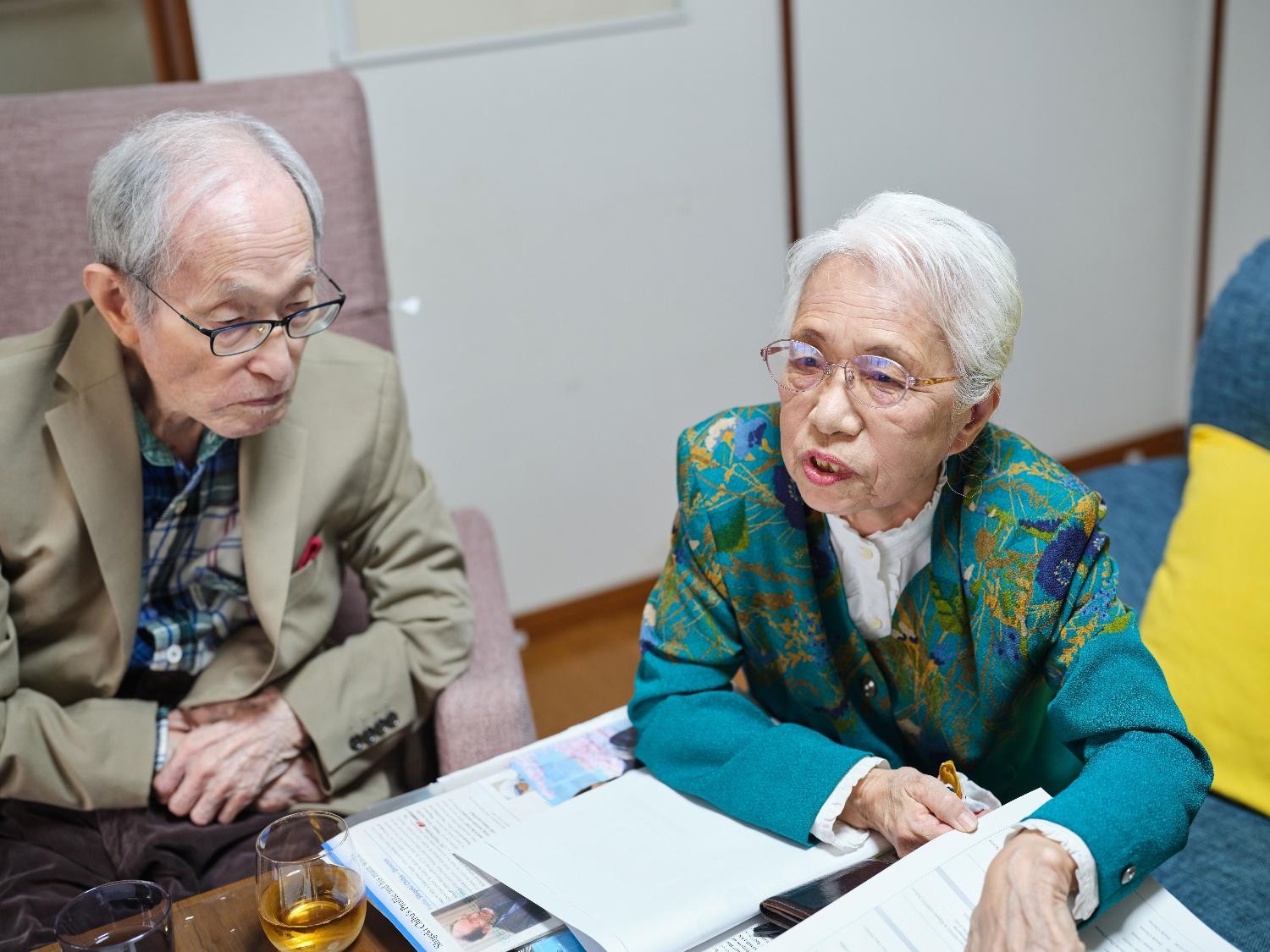
Once you know the truth of how poorly the prisoners were treated during the Pacific War, it’s easy to understand why Australians at the time felt anti-Japanese sentiments. We were deeply moved by Mr Uren’s words, and we felt that they offered a path toward a better future for Australia-Japan relations. It’s a small film, but we hope that it can help strengthen the friendship between Australia and Japan.
Cineliteracy education: finding a sense of belonging through filmmaking
--- As a couple, you were awarded the AJF Achievement Award in 2006 for your contributions to the bilateral relationship through film making including the documentary Cineliteracy: Australia’s Endeavour with Children and Film. What is it about?
‘Cineliteracy’ is a film-based educational approach developed by Dr Jane Mills, a film scholar. In multicultural Australia, many children from immigrant backgrounds struggle with English. The initiative was an effort to address the challenge of these children struggling to find a sense of belonging at school by engaging them in filmmaking.
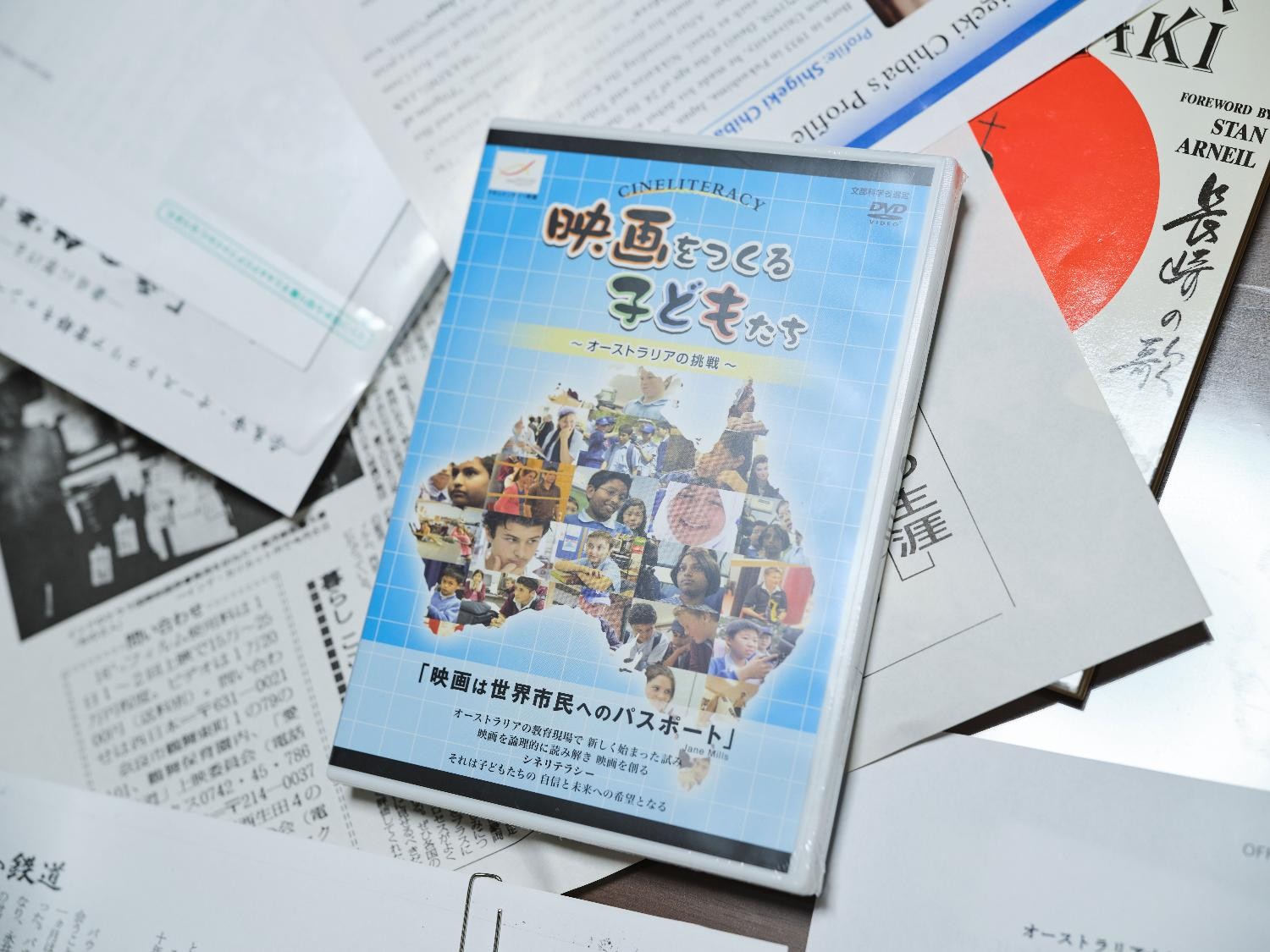
Children take on a variety of roles in the filmmaking process, including acting, scriptwriting, costume design, and makeup. Everyone has their own strengths, and each child has a role to play. When the completed film is screened at a local cinema, the red carpet is rolled out, and the children are welcomed like stars. It reminded us of the importance of people having a sense of purpose. In Australia, ‘cineliteracy’ is incorporated into public education from kindergarten through to high school. These educational initiatives are documented in Cineliteracy: Australia’s Endeavour with Children and Film. In recognition of our efforts to strengthen Australia–Japan friendship and introduce film-based education to Japan, my husband and I were honored to receive the Australia–Japan Foundation Award in 2006.
--- Since then, you have continued to work on various initiatives through Australia-Japan Foundation grants. First, please tell us about your project in 2008.
In 2008, the Kawasaki Shinyuri Film Festival spotlighted Australia, which enabled us to invite Dr Jane Mills, the pioneer of cineliteracy, to Japan. Through lectures and symposiums supported by the Australia–Japan Foundation, we were able to introduce Japanese audiences to firsthand insights from those at the forefront of Australia’s efforts to integrate art and education.
We also held the Australia-Japan Student Film Forum at the same time, where we screened Cineliteracy: Australia’s Endeavour with Children and Film. Eight short films produced by students from Japan and Australia were also showcased, creating an enjoyable opportunity for young creators to connect with each other.
In 2010, we again received support from the Australia–Japan Foundation to organise lectures and film screenings in conjunction with the publication of Like a Samurai: the Tony Glynn Story. The book was written by Father Paul Glynn, Father Tony Glynn’s younger brother, and contains messages that should be read by many people in Japan. By bringing together the book, the film, and opportunities for discussion, we were able to again share Father Tony Glynn’s remarkable life and the story of Railroad of Love.
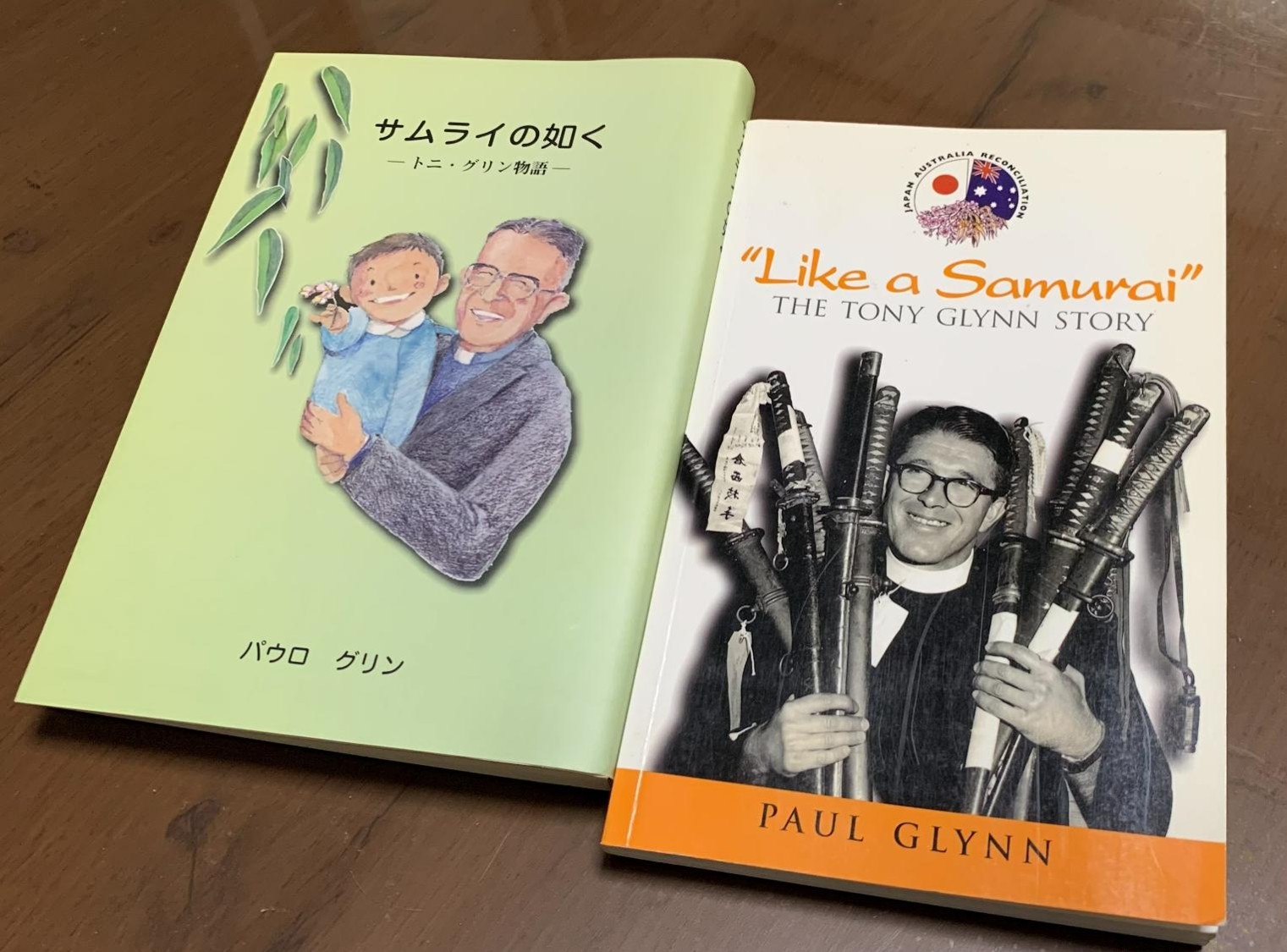
In a time where conflict prevails, I hope that many people will watch Railroad of Love.
--- What messages do you hope to convey to audiences through your films inspired by Australia?
Wounds inflicted by war are not something that can be easily forgiven. Yet there were people who truly devoted their lives to changing hatred to love. I hope that fact will never be forgotten. Only a fraction of people benefit from war, but ordinary people always suffer. That is why, in this day and age, I hope that many people will watch Railroad of Love.
Another message I hope to convey is on education. Through our efforts to promote cineliteracy we particularly want to convey the importance of giving people a sense of pride. Today, there are many children in Japan whose first language is not Japanese, children with roots in places like Asia and Latin America. I hope that education can help these children develop a sense of pride. In this respect, Australian public education is one step ahead of Japan. I would like more educators in Japan to learn about the potential of cineliteracy.
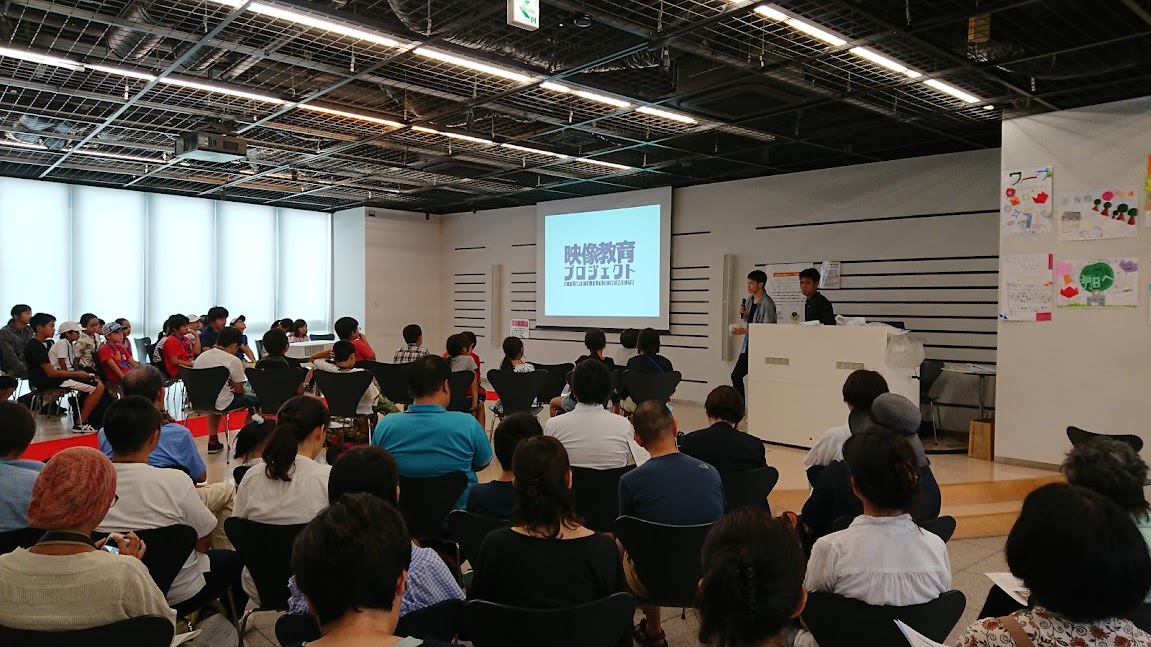
Our efforts to promote cineliteracy continue to this day. From 2015, we introduced cineliteracy education at junior high schools in Hirono-machi, Fukushima prefecture. Hirono-machi was one of the first towns to have its evacuation order lifted after the entire community evacuated following the Great East Japan. At a time when both the student population and the number of residents had declined, junior high school students used cameras and microphones to interview residents and produce documentaries. The public gathered at the screening event, wondering ‘Am I featured?’ People who had once drifted apart were brought back together through the process of filmmaking. Today, we continue this work in Tokyo with high school students who have roots in Nepal and Africa. Our daughter, Clara, and our son Izaya, are deeply involved in this activity.
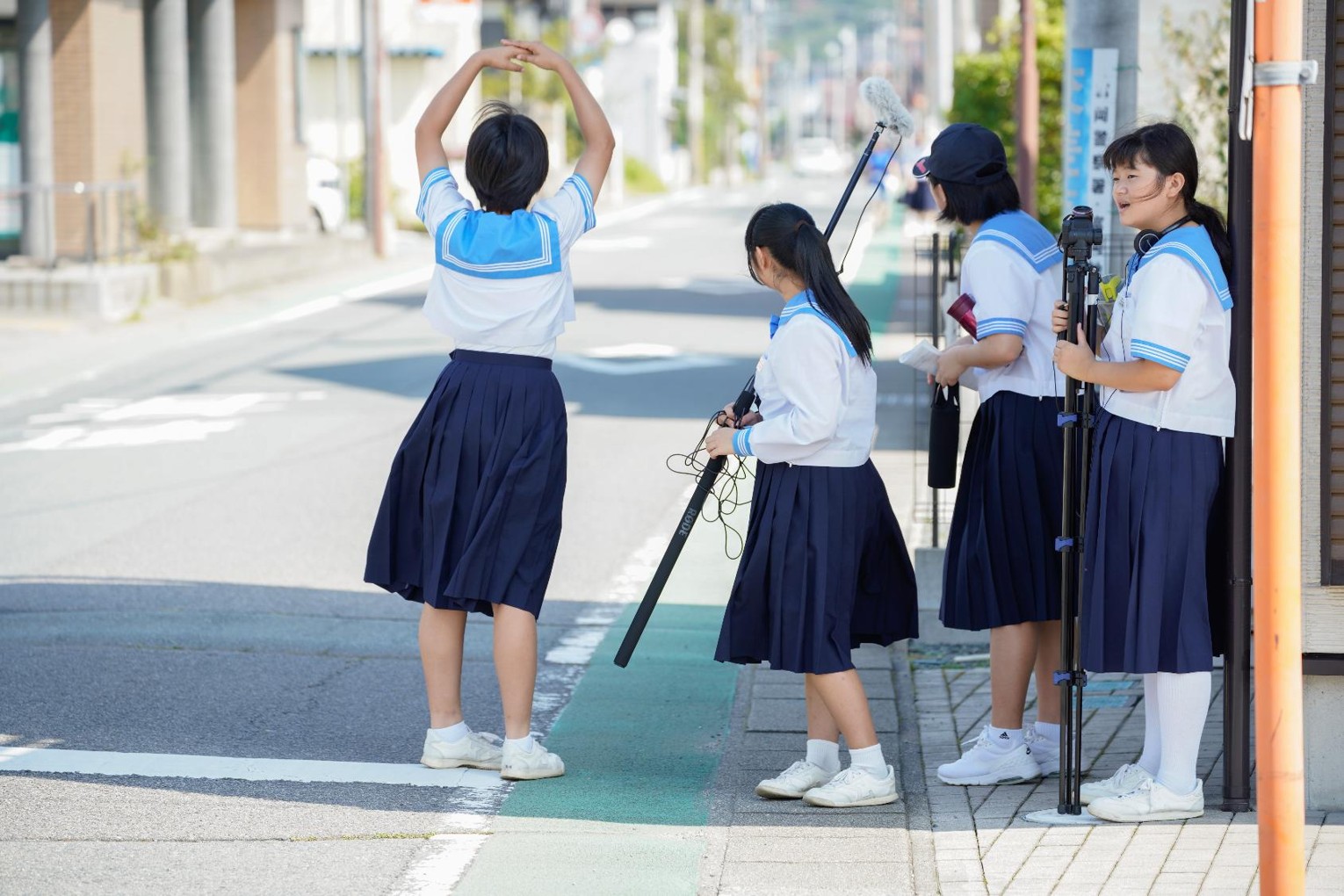
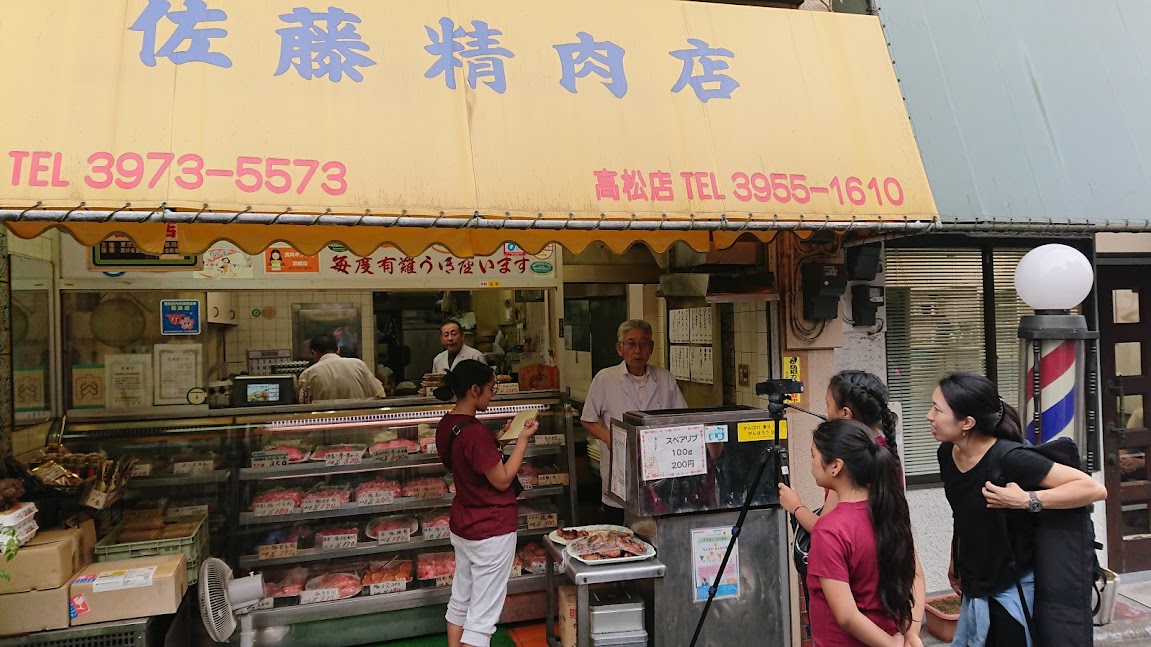
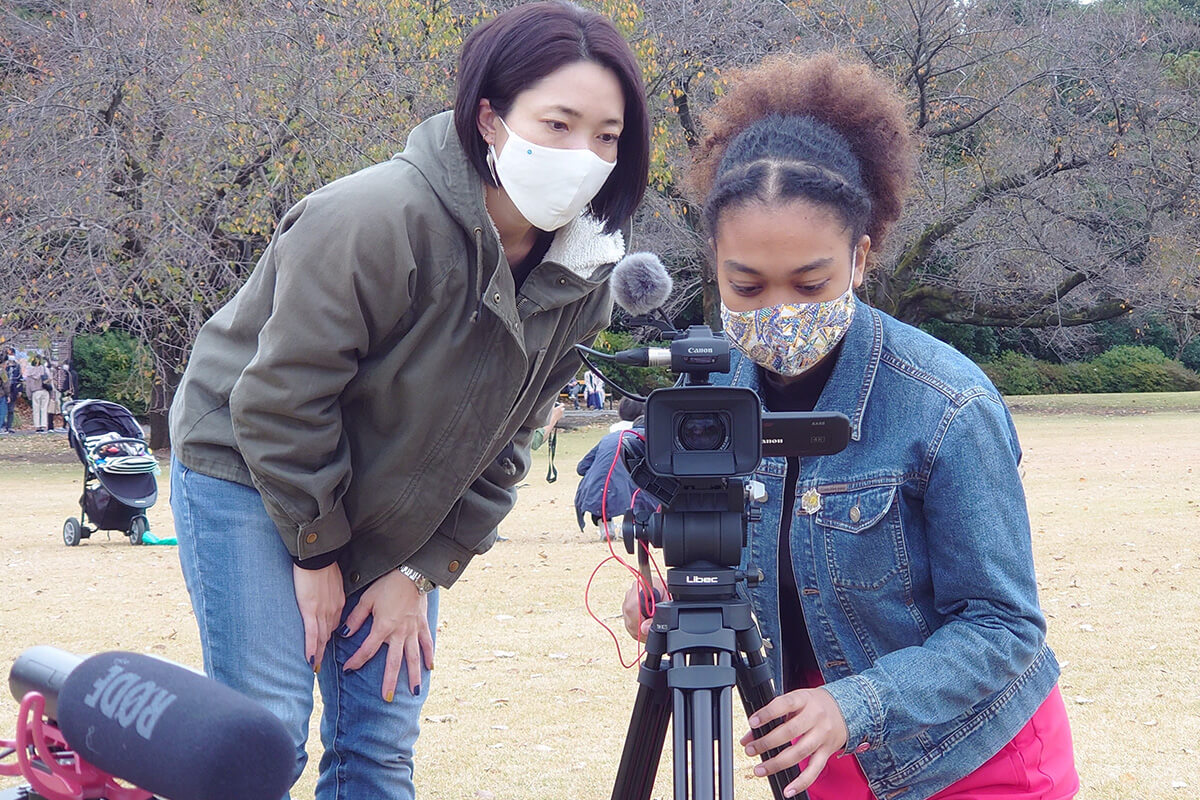
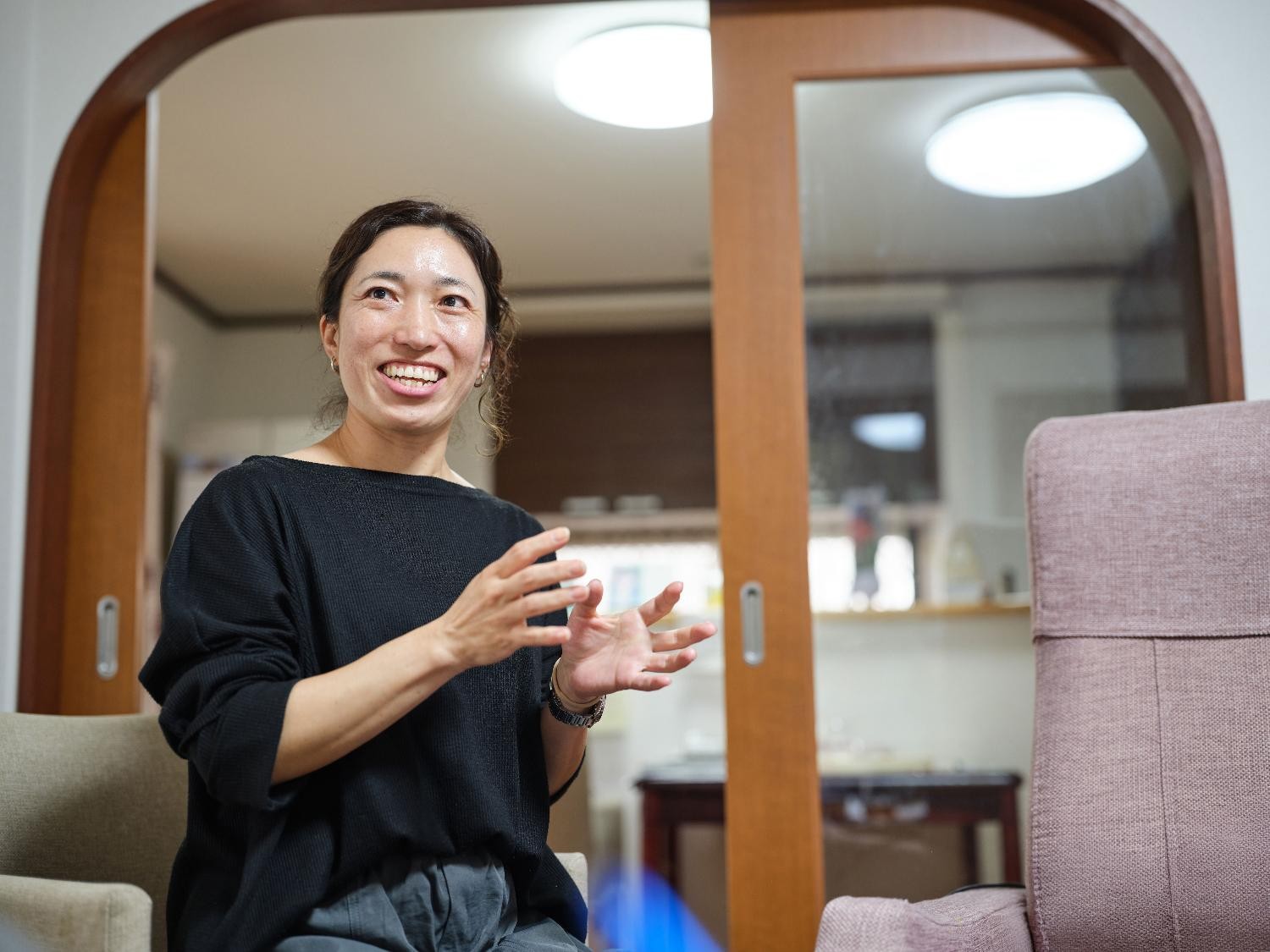
Their daughter Clara, who works as a television director.
2026 marks the 50th anniversary of the signing of the Australia-Japan Basic Treaty of Friendship and Cooperation. There are discussions about screening Railroad of Love in Nara to celebrate this occasion. If this becomes reality, it would be nice to have people gather together and watch together and create a place for discussion, instead of people huddling in front of a small TV at home. In a time where conflict prevails, I hope to pass on this precious story to the next generation instead of simply treasuring it as a memory.
Profile
Yoshimi Chiba (nee Kojima)
Born in Shizuoka prefecture in 1945. A film producer and author. Upon graduating from the Musashino Women’s University Department of English and American literature, she has pursued a career with the Modern Film Association as a television and film producer. Her notable works include Mothers of the World, Mother Teresa and Her World, Children: Our Hope, and Adopted Children of Love (special selection by the Ministry of Education). After leaving the Modern Film Association, she has been focused on producing documentaries directed by her husband, Shigeki Chiba. She frequently travels between Japan and Australia to produce films and connect with students. Recipient of the 2006 Australia-Japan Foundation Achievement Award.
Shigeki Chiba
Born in Fukushima prefecture in 1933. A film director, former specially appointed professor at the Japan Institute of the Moving Image, former principal of the Yokohama Broadcasting Technical School. Upon graduating from the Nihon University College of Art, he made his debut as a screenwriter with A Grain of Wheat (Daiei Film) at 24-years-old. He then pursued his career in film production as a screenwriter and assistant director at Daiei, Nikkatsu, and Toho. After being affiliated with the Modern Film Association, he made his debut as a film director in 1974 with Adopted Children of Love. In 1979, he released Mother Teresa and Her World, which soon received various domestic and international awards. Since then, he has produced films based on the theme of humanism. He has produced two films in Australia: Railroad of Love (1999) and Cineliteracy: Australia’s Endeavour with Children and Film (2007). Recipient of the 2006 Australia-Japan Foundation Achievement Award.
Father Lionel Marsden
A Marist priest born in 1911, ordained in 1940. As a military chaplain, he was assigned to the Australian forces stationed in Malaya, which was then under British rule. He was captured by the Japanese Imperial Forces in 1942 and was forced to work on the Burma Railway where he continued to serve his fellow POWs as a priest. He promised his fellow POWs that, if he survived the war and Japan was defeated, he would visit Japan as a missionary to share his faith and preach a message of forgiveness and peace. He departed for Japan in April 1949, farewelled by former POWs, war widows, friends, and family. He passed away in May 1971.
Father Tony Glynn
A Marist priest born in 1926, ordained in 1951.He met Father Lionel Marsden as a student in 1946, and was deeply moved by his activities. He visited Japan for the first time in 1952 and began his missionary journey in Nara prefecture. He briefly returned to Australia from 1957 to 1959. During this time he organised exhibitions of Japanese crafts and artworks gifted by his parishioners in various parts of Australia, working to promote mutual understanding and reconciliation between Australia and Japan. He also worked to return Japanese military swords that had been to brought to Australia by Australian soldiers at the end of the war to their original owners’ families. He played an important role in establishing the sister-city relationships between Yamatotakada City [Nara prefecture] and Lismore, New South Wales, in 1963, and between Nara City and Canberra in 1993. He also carried out a wide range of activities deeply rooted in local communities, including the establishment of churches, kindergartens, and aged care facilities. He passed away in 1994. His younger brother, Father Paul Glynn (born 1928, ordained 1953, passed away January 2026) was also active in Nara prefecture for many years. He authored several books documenting the life and work of his older brother.